To The Fullest
→ FR
To The Fullest (2025) is an experimental journey of being in the world. An uncompromising, expansive quest for oneself, perpetually broadening the contours of our identities. It is a process of mutation where nothing is fixed, everything vibrates and moves.
What I am trying to achieve is to be what I am to the fullest—
Black to the fullest, a musician to the fullest, a homosexual to the fullest.
It is important that I learn how to be, by that I mean accept everything about me.
Julius Eastman
Black to the fullest, a musician to the fullest, a homosexual to the fullest.
It is important that I learn how to be, by that I mean accept everything about me.
Julius Eastman
Julius Eastman (1940-1990), a black, queer, American composer, expressed himself in 1976 in a United States context marked by the civil rights struggles and by gay liberation movements.
Social norms shape our existences, influence our ways of being. They draw invisible lines that are restrictive, classifying, categorizing, limiting the expression of our identities.
By affirming his desire to be “to the fullest” : black to the fullest, musician to the fullest, homosexual to the fullest, Eastman simultaneously draws an ontological principle and a political positioning. His words resonate like a powerful mantra of affirmation, of resistance, demanding total self-acceptance in a marginalizing society, riddled by racism and homophobia.
Social norms shape our existences, influence our ways of being. They draw invisible lines that are restrictive, classifying, categorizing, limiting the expression of our identities.
By affirming his desire to be “to the fullest” : black to the fullest, musician to the fullest, homosexual to the fullest, Eastman simultaneously draws an ontological principle and a political positioning. His words resonate like a powerful mantra of affirmation, of resistance, demanding total self-acceptance in a marginalizing society, riddled by racism and homophobia.
Sound has become a way
to show - to feel - to fend
to show - to feel - to fend
Intentionally non-linear and elusive in its entirety, To The Fullest offers the experience of a shattered polyphony. The superposition of points of view, stories and aesthetics deploys an imagery with archival as well as prospective value. Through the repetition of movements following the principle of accumulation and gradation dear to Julius Eastman, Fallon Mayanja, Kishie Ajani Mofita, Kongi Mbunga, Nathan Felix-Rivot, Phantom Wizard, Lázara Rosell Albear,mbody the transformative and self-generative capacity of glitch.
We are building a future where we can have the broad range we deserve.
We refuse to shrink ourselves, refuse to fit.
Fluid, insistent, we refuse to stand still: we slip, we slide.
We recognize the contributions of blackness toward liberatory queerness,
and the contributions of queerness toward liberatory blackness.
We refuse to shrink ourselves, refuse to fit.
Fluid, insistent, we refuse to stand still: we slip, we slide.
We recognize the contributions of blackness toward liberatory queerness,
and the contributions of queerness toward liberatory blackness.
Legacy Russell, Glitch Feminism: A Manifesto. 2020
To the Fullest is an initiatory journey activating our memories.
A journey where each sensation awakens, transforms, liberates.
To the Fullest is an initiatory journey activating our memories.
A journey where each sensation awakens, transforms, liberates.
Daisy Lambert


“ femenine - masculine ”
It started as a solo
In 2021, I began with femenine : not as an adaptation, but as a listening experiment.
Inspired by Femenine, I approached the composition as a living organism rather than a fixed archive. The question was simple: how do we listen with the entire body? How do we destabilize the hierarchy between hearing, sensing, and knowing?
The first draft unfolded at FRAC Lorraine. There, the work focused on translating Eastman’s repetitive structures into electronic vibration. Using a tactile bass system (Subpac), I explored the possibility of redistributing sound through the body and multiplying portals of reception. Listening became muscular, porous, unstable.
The project expanded beyond the performance space through workshops and exchanges with deaf and hearing-impaired youth from the INJS of Metz. Sound was no longer only audible; it became tangible, relational. The piece was already shifting from solo to collective terrain.
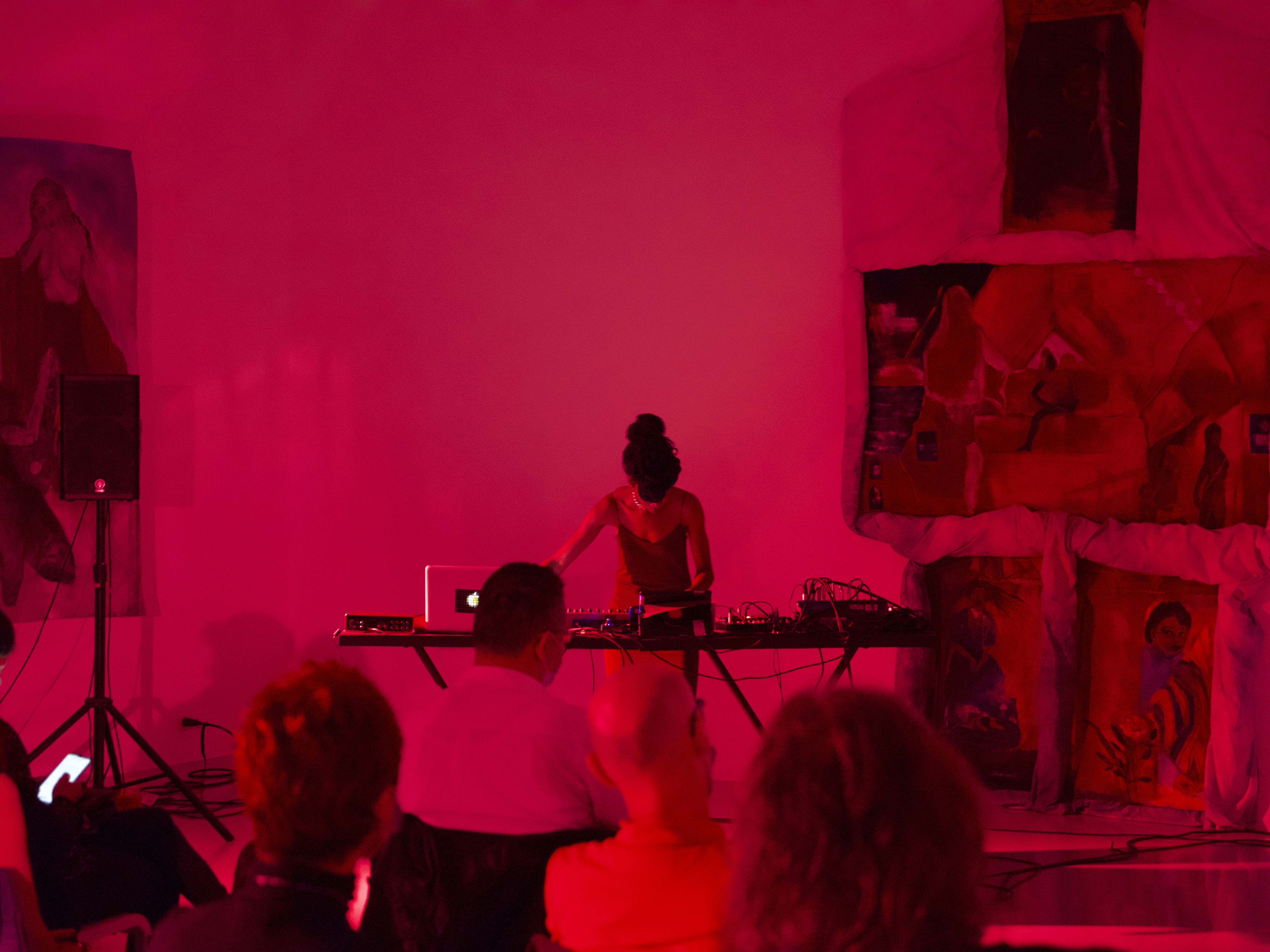
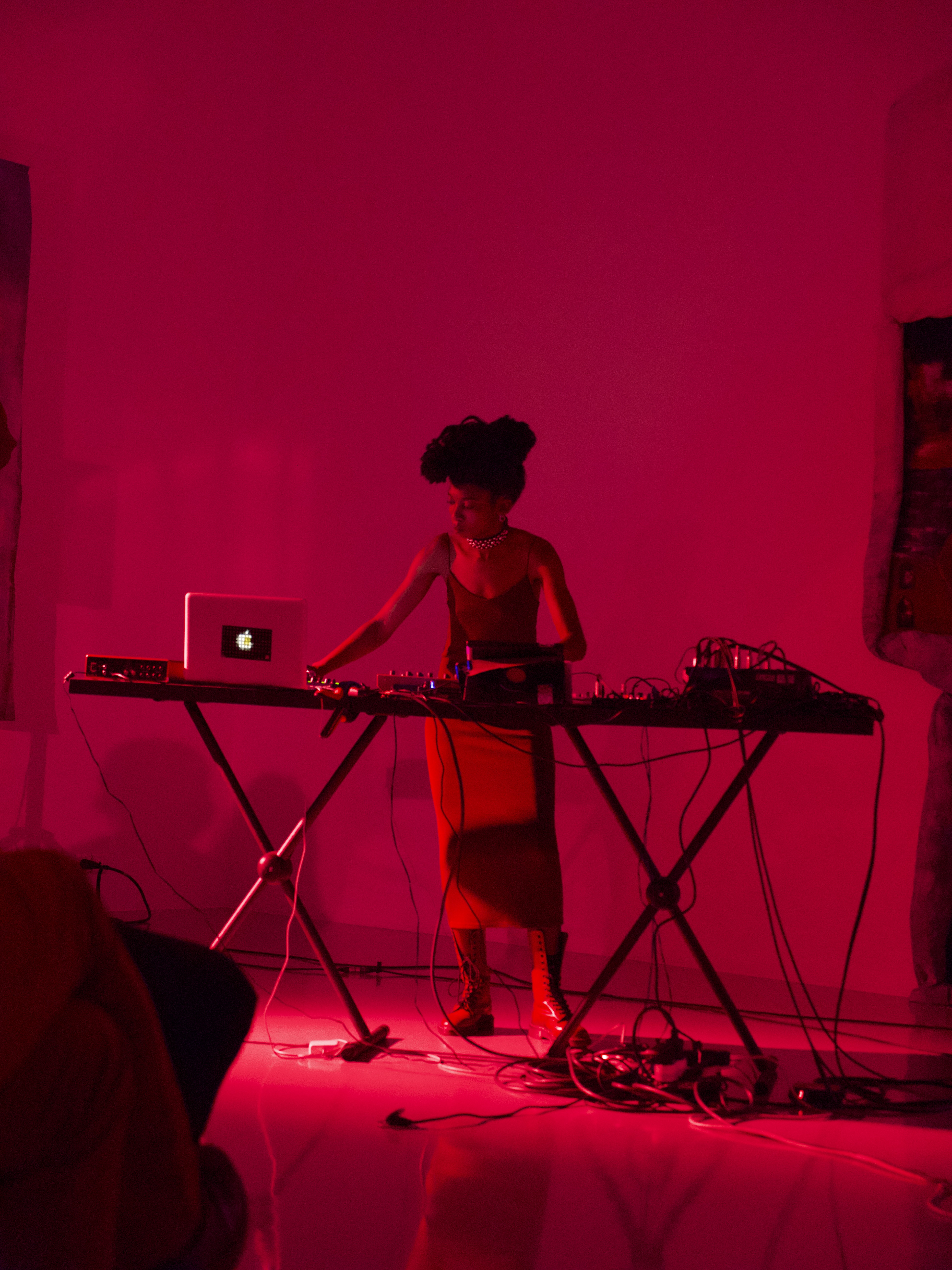
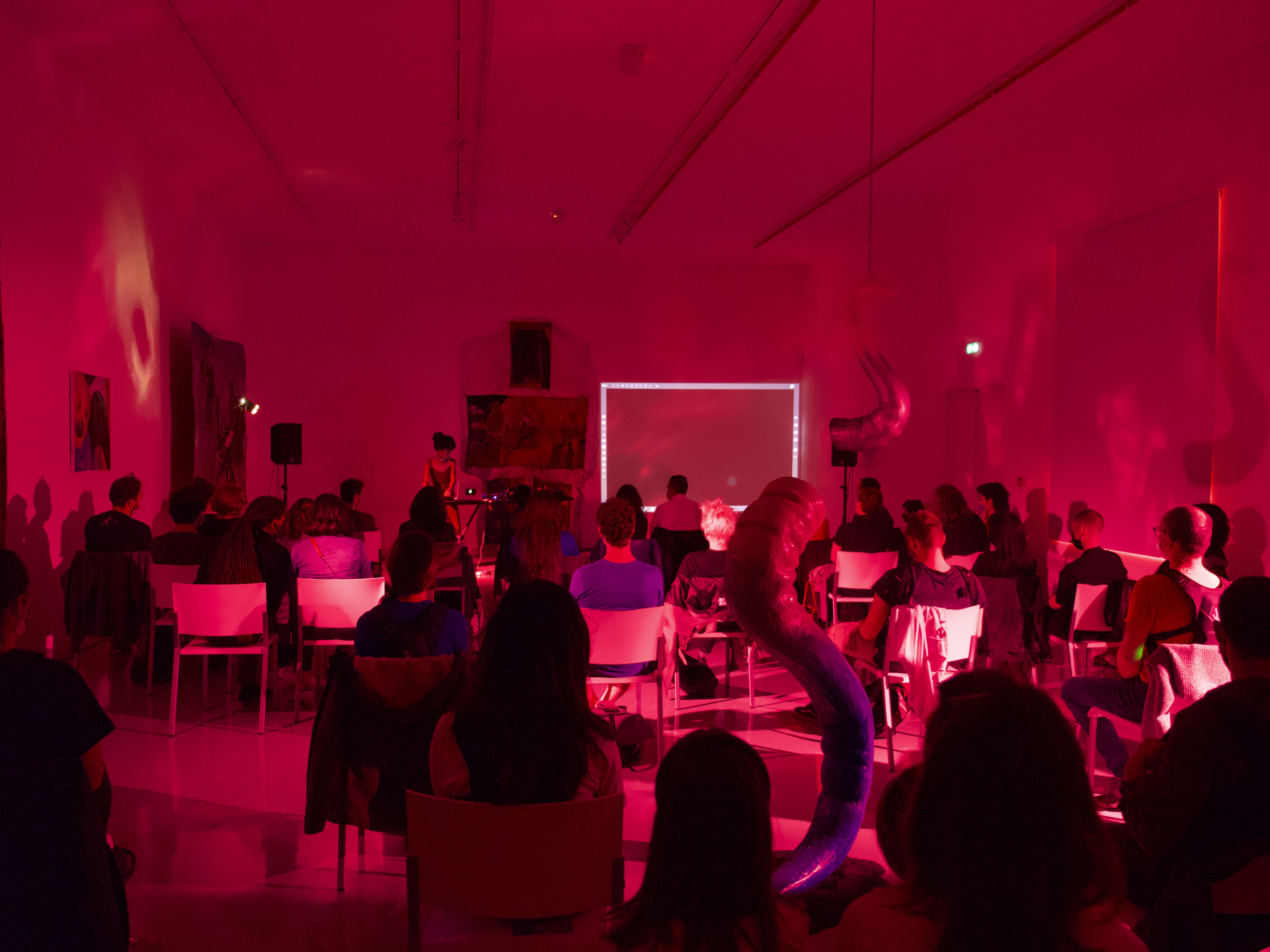
femenine - frac Lorraine
from solo to duet
Later that year, at Enter Art Fair, femenine entered into dialogue with “Glitch Feminism: A Manifesto”. The glitch : as refusal, as interruption, as opacity, became compositional strategy. The voice fractured, repeated, layered. The body insisted.
The second phase emerged through collaboration with Alen Nsambu. femenine became plural.
Together, we questioned how we perceive the world, how we perceive ourselves, how we interact daily. The challenge was to study alternative modes of interaction - non-verbal, discursive, sensitive - and also to interrogate listening positions within sonic and sensory spaces.
Listening is never neutral. It is shaped by habitus, by social positioning, by embodied history. The ear carries gendered, racialized, political codes. By displacing these codes, we displace the representations and discriminations they sustain.
In this phase, the voice became central. Not only as sound material, but as social body. We explored declamation, breath, fragmentation. The composition leaned on Eastman’s notion of “organic music”: accumulation, gradation, density : followed by desintegration.
The performers became terrains. Altered landscapes. Digital and physical presences overlapping.
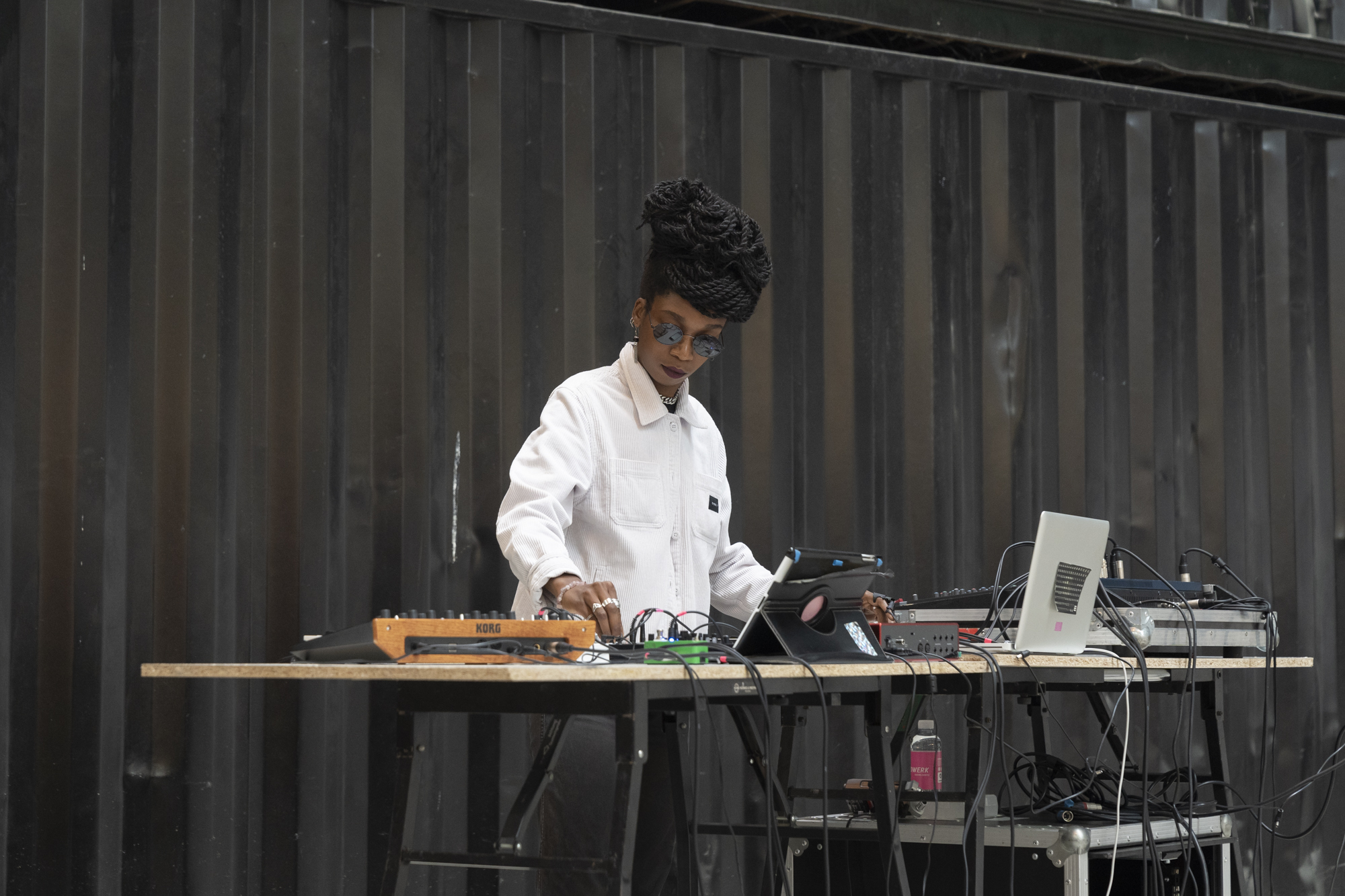
femenine - EnterArtFair2021_ArtProgram
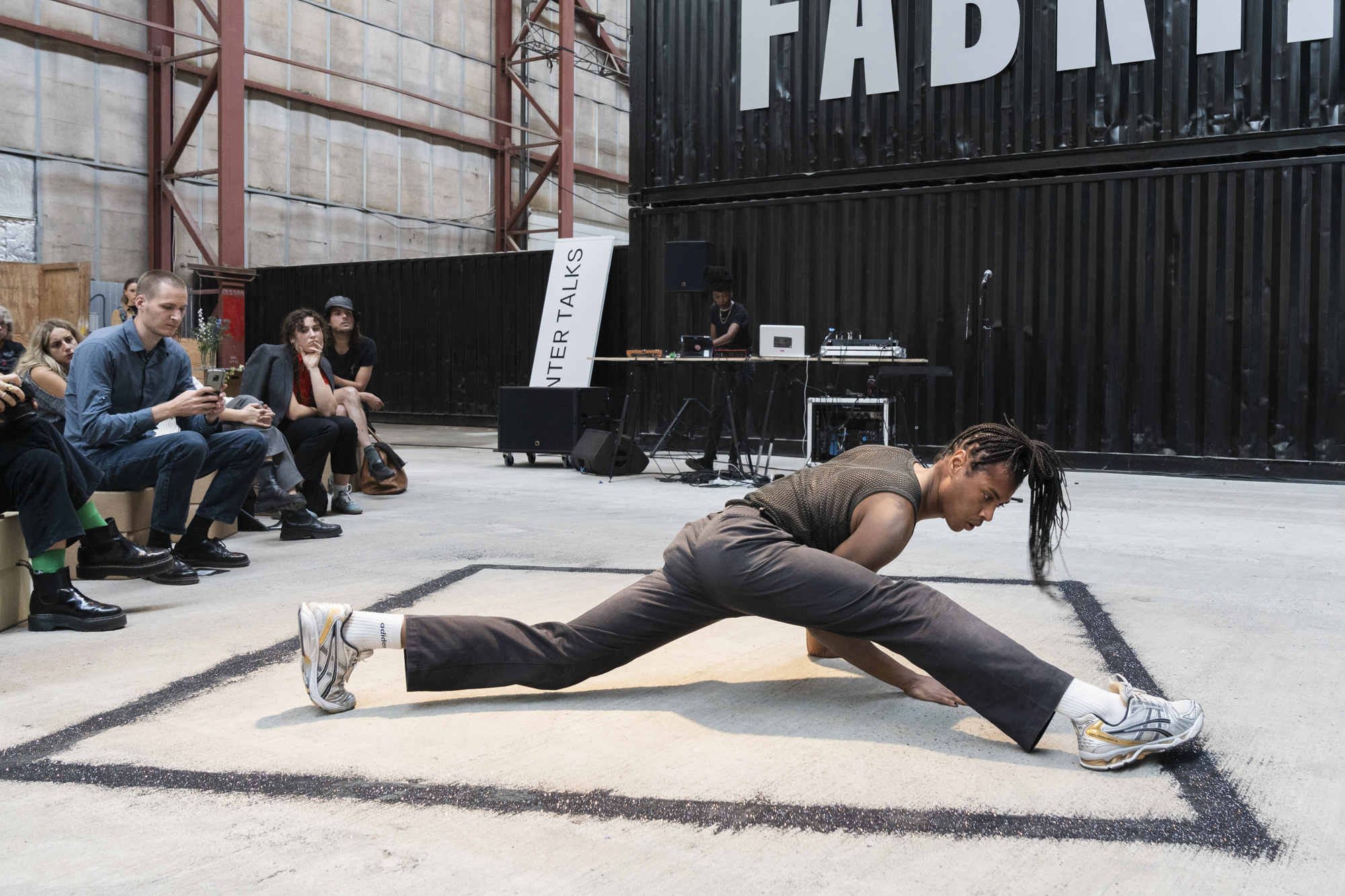
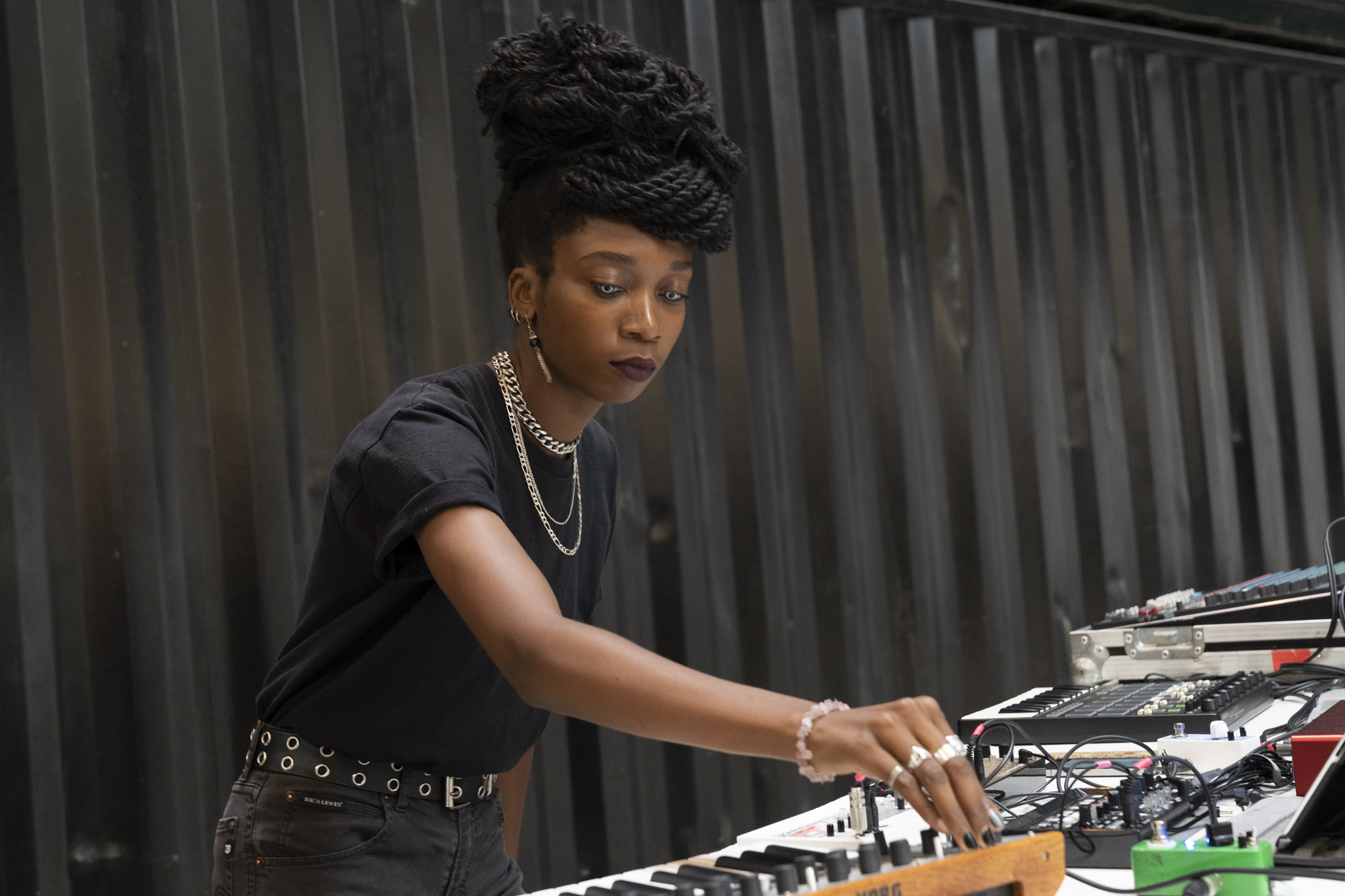
femenine - EnterArtFair2021_ArtProgram
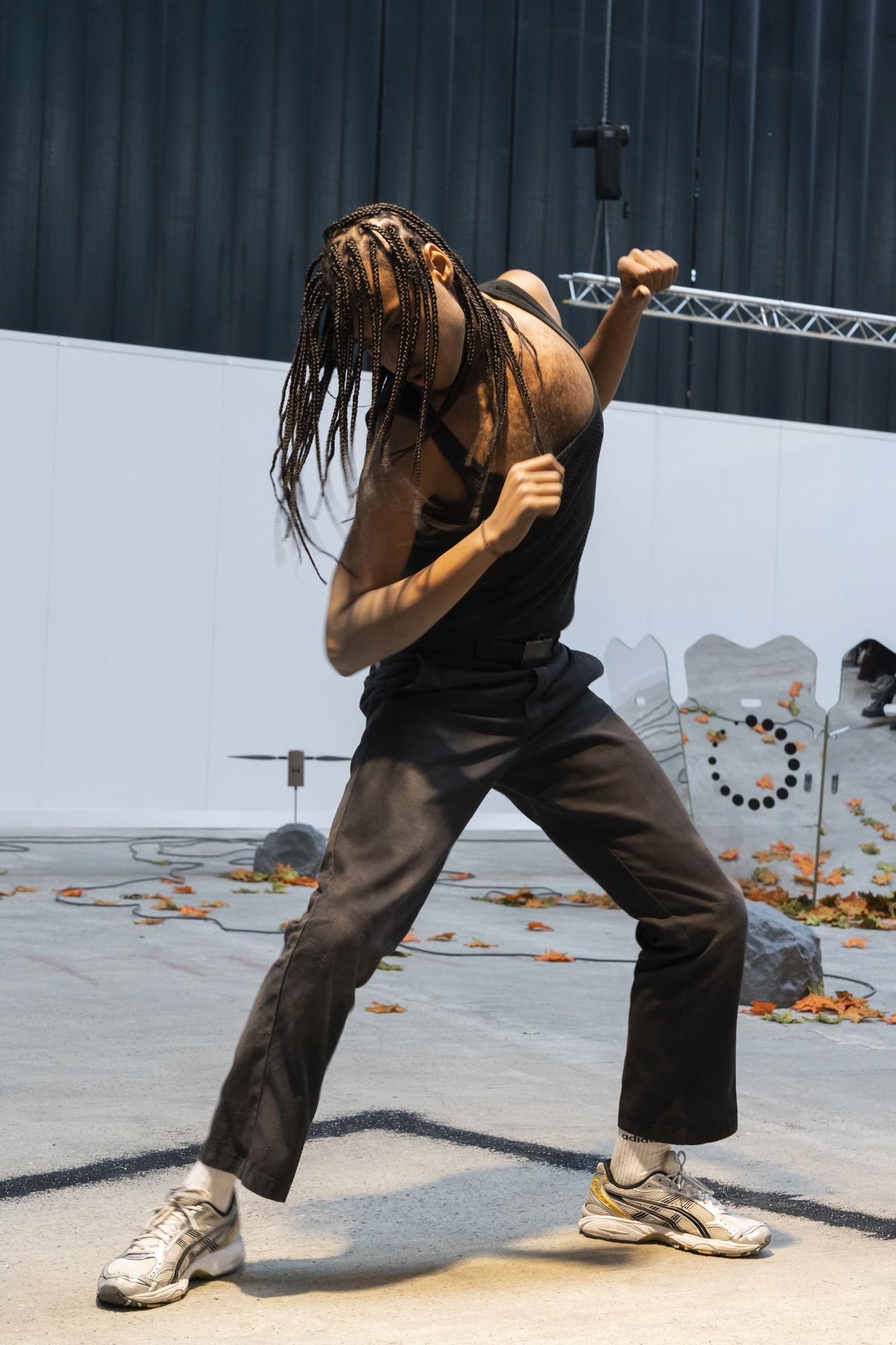
femenine - EnterArtFair2021_ArtProgram
“ femenine - masculine ”
Masculine began as absence.
Unlike Femenine, Masculine remains a trace without score. That absence opened a speculative field. Imagination became archive. Grounded in the disappearance of the original composition and the space that disappearance creates.
The work entered into conversation with bell hooks and her book The Will to Change. If patriarchy scripts masculinity as domination and emotional restriction, what does it mean to compose masculinity otherwise? What does a vulnerable, porous, listening masculinity sound like?
With Ajani, masculine unfolded as four performative tableaux during Night Shift in 2022. The body moved between assertion and collapse. Voice between command and tremor. Electronics between glitch and disintegration.
The work does not oppose feminine and masculine as binaries. It treats them as frequencies : modulating, leaking, coexisting.


masculine - Night Shift
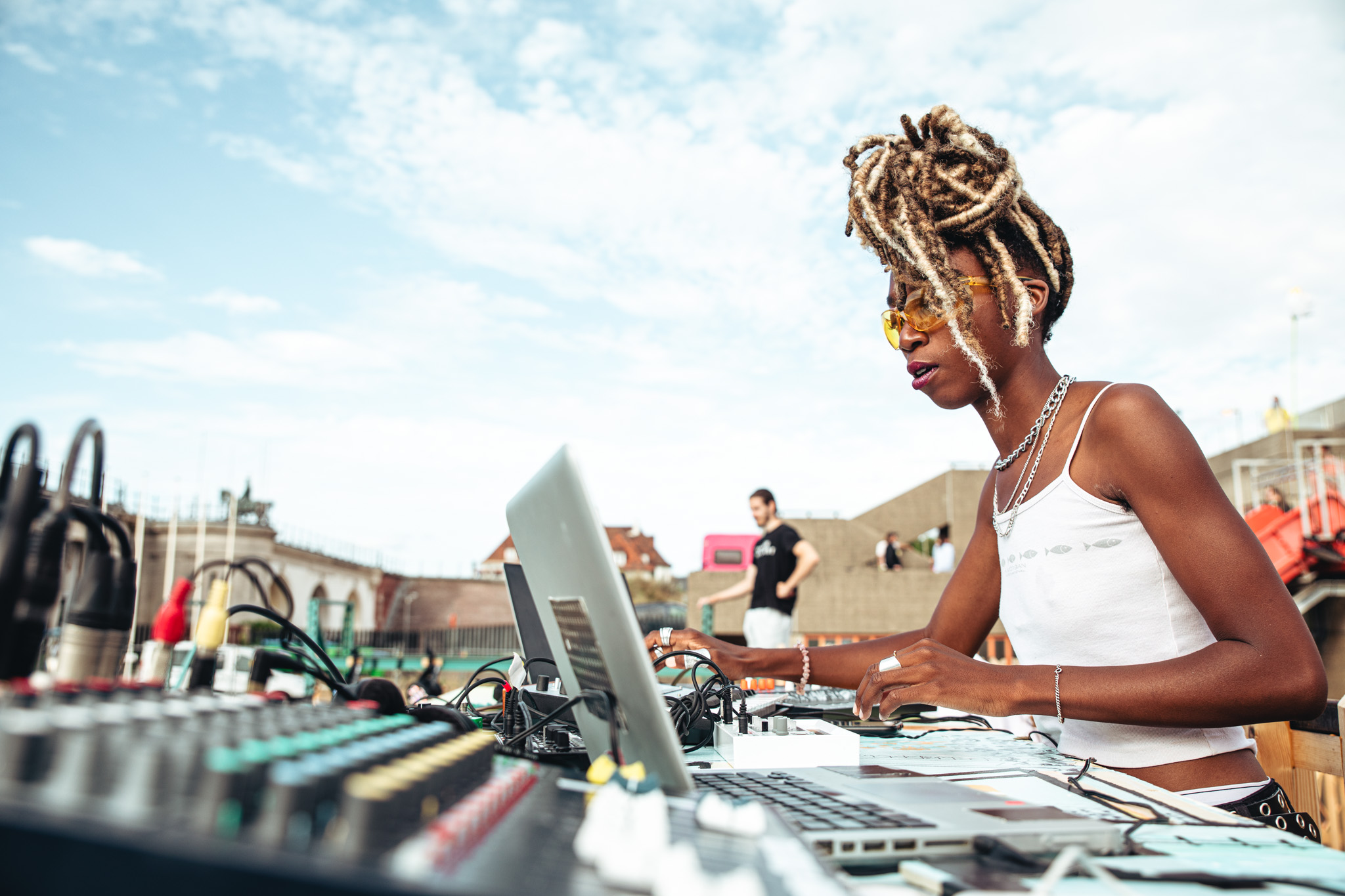
masculine - Night Shift
“ Le Futur Est Présent ”
Award received as part of the project “La vie bonne,” a call for performative works initiated by AWARE and the Centre national des arts plastiques, dedicated to women artists.
This project took the form of a sonic archive composed with digital voices and electronic machines. Drawing from technofeminist thought, the piece functioned not only as a composition, but as a performative protocol for femenine / masculine.
The composition establishes a structure of invitation.
A score as an open architecture.
Rather than fixing gestures, it proposes conditions: thresholds of entry, modes of attention, frequencies to inhabit. The protocol defines durations, accumulations, densities and leaves space for deviation, interruption, refusal. Improvisation becomes a method of re-appropriation. Each performer negotiates their position within the sonic field, activating their own history, their own embodied archive.
Technofeminism here is an operational framework. It allows technology to become a site of encounter rather than domination. Machines are not extensions of control but companions in vulnerability. Digital voices are not simulations of presence; they are layered temporalities, ghosted lineages, speculative futures.
Within this structure, composition becomes relational.
It generates a shared ground where listening reorganizes hierarchy.
The protocol encourages a circulation between solo assertion and collective resonance. It creates the possibility of reunion: between body and machine, between archive and improvisation, between diasporic memory and speculative fiction.
In my practice, rooted in live electronic performance, in repetition, in accumulation, this framework amplifies what is already there: the tension between control and surrender, between programmed sequence and glitch. The machine sets a tone; the body disobeys, syncopates, stretches.
Technology is approached as both tyrannical and emancipatory, as terrain. Through sound, the work activates new daily practices : micro-political gestures of attention, of care, of co-presence. It produces zones of contact between the vibrating body and shared space, between the private interior and the collective exterior.
The composition becomes an instrument of mutation.
An archive in motion.
A rehearsal for other ways of being together.
A cyber exercise of knowledge, politicization, defense but also of tenderness, of recognition, of return.
* https://www.youtube.com/watch?v=45yn2-dK14c *